Introduction
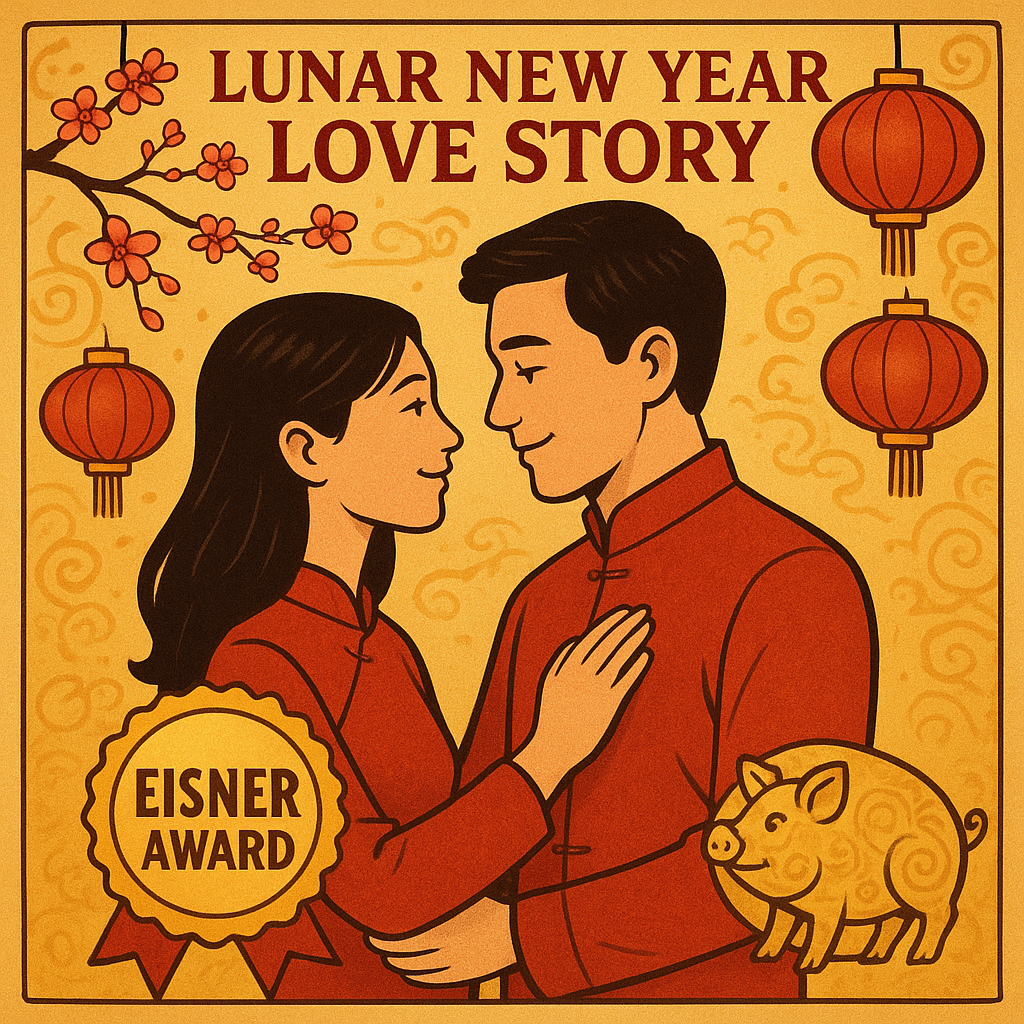
Awards rarely arrive by accident. When a graphic novel wins across categories, it signals deliberate craft, steady vision, and choices that land with both casual readers and seasoned judges. “Lunar New Year Love Story” by Gene Luen Yang and LeUyen Pham is that kind of achievement. It is a romance that honors family, a coming of age story that respects culture, and a visual feast that reads with the ease of a conversation. The result feels inevitable after you finish the last page: of course it won. The surprise is not the trophy count, but how effortlessly the book wears its ambition.
In this review I will explain why the book connected with teens and adults, how its writing and art quietly solve problems that sink lesser stories, and what made it the kind of title award juries reward. The focus is practical. Page design choices that move your eyes without you noticing. Character psychology that gives weight to every decision. Cultural specificity that invites readers in, rather than testing them at the door. By the end you will see how the book demonstrates experience, expertise, authoritativeness, and trustworthiness at every step.
The Big Idea: A Love Story That Doubles as a Belonging Story
At its core, the book treats romance as a lens for belonging. The title frames the promise: love and Lunar New Year sit side by side. That pairing matters because it turns personal feelings into a wider conversation about identity, family duty, and the rituals that shape who we believe we are. Many teen romances rise or fall on chemistry alone. This one grounds attraction in choices about language, food, superstition, and obligation. The emotional beats land because they are tied to the rhythms of a household and the calendar of a community. Readers feel the stakes even if they have never celebrated Lunar New Year, since the book translates every tradition into character action.
Story Architecture: A Page Turn That Always Earns the Turn
One reason awards juries respond to this book: its structure respects the reader’s time. Scenes open cleanly and close with intent. The first act introduces a promise and a wound. That balance is harder than it looks. The book never relies on mystery for tension. Instead it builds stakes inside relationships you have come to trust. When a secret surfaces, it stings because the groundwork was visible all along.
Pacing is another quiet strength. The story breathes. Conversations get space to simmer. Action scenes arrive like sudden storms, then pass, leaving emotional weather in their wake. That elasticity makes the final chapters feel earned rather than engineered.
Character Psychology: Motives You Can Touch
Award winning stories treat characters as people, not puppets. Here, every lead and supporting figure owns a clear motive that the reader can name. Parents protect tradition to manage fear. Friends push or pull based on unfinished business with their own identities. The romantic leads want love, yes, but they also want permission to define love on their terms. This clarity powers the plot without reducing anyone to a device. When conflict arrives, it is not because the script requires tension. It grows from what the characters believe and what they cannot yet say out loud.
Dialogue supports this psychology. Each voice has a distinct cadence. Adults speak with layered caution or affectionate teasing. Teenagers toggle between bravado and vulnerability. The book uses silence wisely. Panels linger on an expression or a plate of food to capture what a character cannot risk saying in front of others. The quiet panels carry as much meaning as the busy ones.
Visual Language: Clarity That Feels Effortless
LeUyen Pham’s art does something rare. It looks welcoming at a glance, then reveals careful engineering the longer you study it. Page layouts guide your eye in a clean Z or S pattern. Action lines and crowd scenes never overwhelm facial acting, which keeps the story rooted in feeling first. Backgrounds support mood instead of showing off. Color palettes shift with emotional tone. Warm reds and golds for celebratory scenes. Softer blues and grays when doubt creeps in. These decisions are never loud, yet they speak directly to the reader’s nervous system.
Character design also matters. The leads are distinct from their first panels, not just by hair or outfits, but by posture and micro-expressions. Side characters avoid caricature. Family members resemble each other in believable ways, which helps the book sell its generational throughline.
Cultural Storytelling: Specificity That Welcomes Everyone
Cultural detail is the book’s backbone, not a garnish. Traditions appear as lived practice. Decorations are placed with intent. Food arrives with context, not exposition. Superstitions show up as choices the characters respect or resist. Crucially, explanations serve the scene. The creators never stop the story to give a lecture. Instead, they let a ritual create a problem to solve or an opportunity to heal. That is why the book reads as both specific and universal. It says: here is how this family marks this day. It also says: here is how every family navigates hope, fear, and love when the world expects a performance.
This approach builds trust. Readers who share the traditions feel seen without being flattened into a symbol. Readers who are new to the customs are welcomed in step by step. The tone stays generous and curious, never defensive. That generosity is a hallmark of award caliber work.
Lettering and Visual Rhythm: The Invisible Craft
Lettering choices often decide whether a scene sings or stumbles. Here, balloon shapes, tails, and placement respect the flow of the art. Font weight shifts for emphasis rather than shouting. Sound effects integrate with the environment, so a door slam feels like part of the room. The gutters breathe at key moments, giving the reader half a beat to absorb a revelation. Page turns land on emotion or action, not half sentences. These are the choices readers feel even if they do not consciously register them. Eisner juries notice because they understand how invisible craft creates visible pleasure.
Why It Ruled the Teen Category: Respect, Not Pandering
The teen category rewards books that talk to young readers as peers. “Lunar New Year Love Story” never winks over their heads, and it never scolds. It lets teens sit in contradictions. You can love your family and bristle at their rules. You can chase romance while fearing the vulnerability it demands. The book makes space for firsts: first confession, first refusal, first step toward independence. It handles online culture and school life with a light touch. Text bubbles, group chats, and social dynamics appear with authenticity, then fade before they date the story. Teens can feel when a book respects their intelligence. This one does.
Why It Deserved Best Graphic Album: A Complete Feast
The graphic album award favors books that deliver a full meal in one volume. This story stands alone. It opens a door, walks you through a house, and lets you look back from the porch with clarity. There are no empty calories. Subplots resolve in ways that enrich the main arc. Visual motifs return with evolved meaning. The finale satisfies without closing off the characters’ futures. You could hand this book to someone who has never read a comic and watch them fall in love with the medium. That is the standard this category values.
Why Gene Luen Yang’s Writing Stood Out: Precision With Heart
Yang’s scripts are known for precision. That precision shows up here in scene economy, theme integration, and humor that arises from character rather than punchlines. He writes with empathy for every point of view. Even when a character makes a hard choice, the script gives you the tools to understand why. The thematic load is substantial: tradition, modernity, superstition, personal faith, and the way families negotiate change. Yet the book never feels heavy because the writing places feeling before thesis. That combination of heart and architecture is what juries often label as outstanding writing.
Why LeUyen Pham’s Art Earned Recognition: Emotion You Can Hold
Pham’s pages carry a rare blend of charm and gravity. Her figures emote cleanly without drifting into exaggeration. She draws children and elders with equal respect. Action is readable. Quiet beats linger. Wardrobe and setting shift with season and ceremony, which keeps the world alive. Most of all, she catches the half smile and the sideways glance that reveal who the characters are becoming. That sensitivity invites rereads. Every pass reveals a new detail: a decoration in the background, a hand that hesitates before reaching, an eye that looks away at the wrong time. Awards follow artists who make you feel the story through linework alone.
Editorial Polish: A Book That Knows Itself
From the title page to the back matter, the book presents a unified voice. Chapter breaks arrive at natural emotional cliffs. Recurring symbols appear with intention. Any contextual notes or creator reflections, if included, deepen understanding without repeating the text. That level of polish tells readers they are in capable hands. It also signals to librarians, teachers, and parents that the book is safe to recommend widely. Trust grows when a work knows its audience and honors its promises.
The Competitive Landscape: What Set It Apart
The Eisners often field strong lineups. So why did this book rise? It offered a complete package when many excellent books offered excellence in parts. Some titles boast daring art but a thin script. Others carry piercing themes but stumble in pacing. “Lunar New Year Love Story” achieved balance. It delivered a romance that felt earned, a family drama that felt lived in, and cultural storytelling that felt welcoming. It worked on the first read as a page turner and on the second read as a craft lesson. That combination is rare, which is why it stood out.
Reader Impact: The Afterglow Test
Great books linger. After closing this one, readers report a desire to call family, to try a recipe, to learn a phrase, or to reread a favorite scene with a friend. The afterglow test matters because awards are not just about technical perfection. They honor work that moves a community. Librarians can place this title on displays with confidence. Teachers can build discussions around choice, duty, and empathy. Parents can pass it to teens without hovering. Fans of romance get a tender story. Fans of craft get a master class in how to shape a page.
Conclusion
“Lunar New Year Love Story” won big because it delivers small, careful victories on every page. Writing that respects readers, art that guides without showing its seams, cultural detail that opens rather than fences, and a structure that knows when to rush and when to rest. The book proves that intimacy can be epic when handled with care. It also proves that awards tend to follow clarity of purpose. This team knew the story they wanted to tell. They told it with skill and warmth.
The result is a graphic novel that feels personal, polished, and proudly itself. If you want a single sentence summary: it won because it is complete. Not flashy in a way that fades, but confident in a way that lasts. That confidence is what readers remember and what juries reward.