Introduction
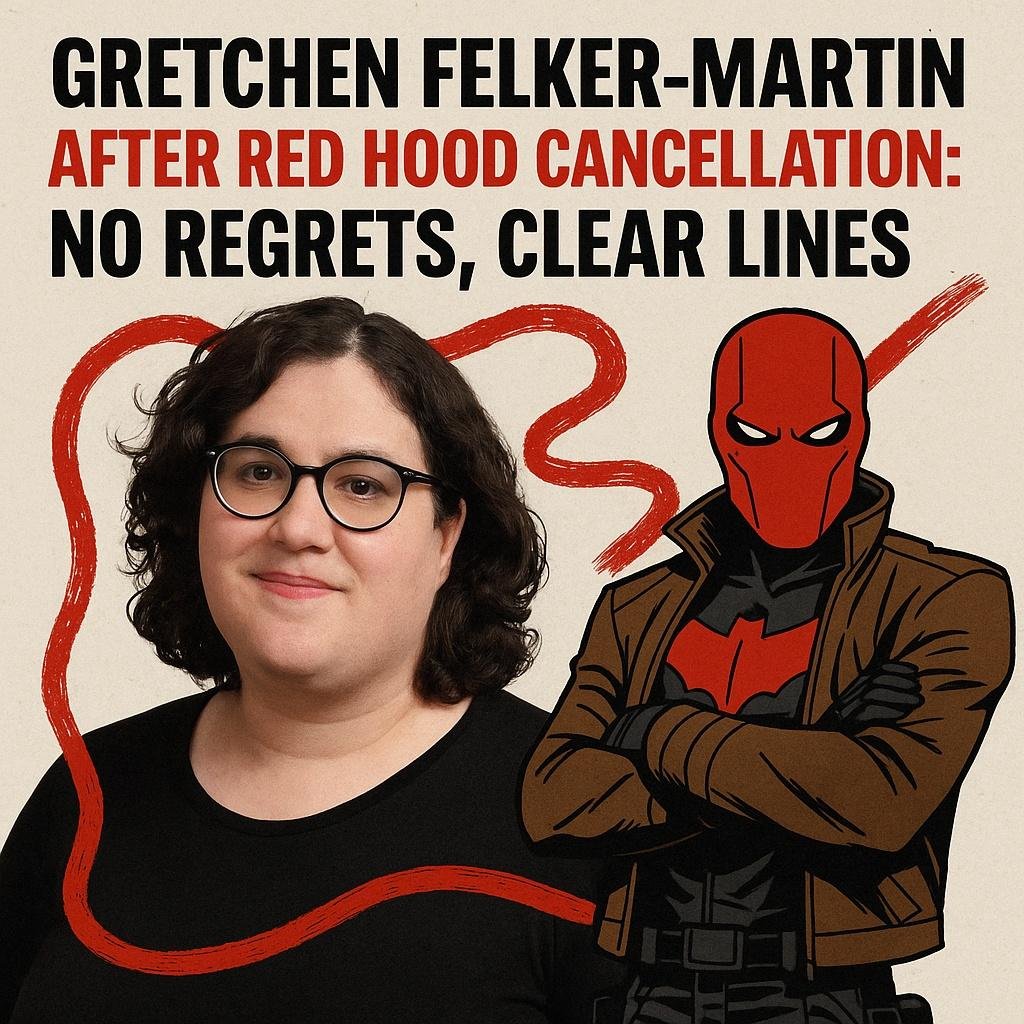
The sudden cancellation of Red Hood from DC sent a jolt through the comics community. Writer Gretchen Felker-Martin, acclaimed for the novel Manhunt, was at the center of it after social media posts about the killing of right-wing activist Charlie Kirk. DC determined that those posts violated its social media policy and pulled the book. In the hours that followed, Felker-Martin told an interviewer that she regretted the impact on collaborators, yet stood by her words about Kirk. The creative fallout, the ethics questions, and the industry’s response have all converged into one of the year’s most debated stories.
This article examines what happened and why it matters. It explores the balance between creator speech and corporate policy, the ripple effects on artists and editors, and the broader climate in which publishers make fast decisions to protect a brand. It also offers practical context for readers, retailers, and professionals about what to watch as the situation evolves.
The Core Event: A Project Stopped In Its Tracks
Red Hood was moving through the usual production stages when events off the page brought everything to a halt. Felker-Martin made posts on Bluesky reacting to Kirk’s killing during a public appearance in Utah. DC reviewed the posts and cited its social media policy in canceling the title. The decision was swift and categorical. According to Felker-Martin, the company communicated that the posts crossed the line the policy was designed to enforce.
The announcement did not arrive in a vacuum. Publishers maintain standing policies that cover harassment, discrimination, and threats, and that set expectations for how creators conduct themselves in public venues. When policy and publicity collide, decisions arrive fast. This is especially true when a death is involved, political tensions are high, and elected officials are publicly condemning violence. The speed here was consistent with that pattern.
Felker-Martin’s Position: Empathy For Colleagues, No Retreat On Words
Felker-Martin’s response included two distinct points. First: she expressed concern for the team around her. Red Hood was not a solo project. Artist Jeff Spokes and other collaborators put time and care into the work. Cancellations do not only erase a slot on a release calendar. They disrupt schedules, income, and the momentum of portfolios. Felker-Martin said she had reached out privately to members of the team to check in and to take responsibility for the consequences they were facing.
Second: she stated that she had no regrets about what she said regarding Kirk. That clarity matters. It communicates that the disagreement with DC is not about the facts of what was posted. It is about whether the posts should trigger corporate discipline, and about where a large entertainment company sets its boundary during a volatile news cycle. In an era when many public statements get softened after corporate pushback, Felker-Martin’s refusal to disown her words made the rift unmistakable.
What DC’s Social Media Policies Are Designed To Do
Publishers craft social media rules for three reasons. They reduce legal risk. They project a coherent brand identity to broad audiences that include children, parents, librarians, and educators. They set internal expectations so managers are not improvising under pressure. The policies are not written to win debates about morality or rhetoric. They are written to produce predictable decisions that keep the company out of legal and reputational jeopardy.
Those rules are often content neutral on politics and content specific about calls to violence, targeted harassment, or celebration of harm. When tragedy strikes in real time and a creator’s public comments are emotionally charged, companies revert to the text of the policy. It becomes a switch rather than a dial. The more public and polarizing the speech, the quicker that switch flips.
The Impact On Collaborators: Invisible Costs Made Visible
Cancellations hurt most where attention is thinnest. Pencilers, inkers, colorists, letterers, variant cover artists, assistant editors, and production staff lose credit lines that might have helped them land the next job. Time already invested turns into unpaid labor if contracts are structured in a way that ties payment to publication. Even when compensation is honored, a finished issue that never ships cannot be shown in a portfolio until and unless rights are clarified.
Felker-Martin’s outreach to collaborators acknowledges those realities. It is also a reminder that public arguments about policy and speech can overshadow the people who did nothing more controversial than finish pages on deadline. In practical terms, professionals on the team will now be asking agents and editors whether those pages can be repurposed, whether kill fees apply, and whether there is any path for the art to see daylight in another context.
The Political Context: Condemning Violence Without Closing Debate
Kirk’s killing created a predictable pattern. Officials condemned the violence. Commentators argued about his record of inflammatory speech. Social media fractured into grief, anger, and indifference. In that environment, any commentary about the victim was going to be parsed for tone. Editors and legal teams know this. They watch for phrasing that can be read as celebration of harm. If they see it, they act. That does not settle the ethics debate about how people respond to public figures who spread harmful ideas. It does explain the corporate calculus.
For readers and critics who want a healthier discourse, two truths can sit together. It is possible to denounce political violence categorically while also acknowledging why many will refuse to mourn a figure who campaigned for policies and narratives that harmed others. Companies are not designed to hold that nuance on their public channels. Creators sometimes are. Friction follows.
A Short History Of Speech Flashpoints In Comics
This is not the industry’s first brush with sudden discipline tied to speech. Variants have been pulled after readers identified hidden messages. Creators have lost assignments after posts that were judged racist, antisemitic, or harassing. In other cases, companies stood by creators whose controversial work stayed within policy and law. The throughline is not ideology. The throughline is risk management and timing.
The lesson for observers is to resist simple pattern matching. Every case turns on the specific language used, the immediacy of the news event, and the visibility of the brand involved. The Red Hood situation fits that principle. It includes a high profile license, a recognizable character, a fresh tragedy, and language that legal teams believed would make the company vulnerable if left unaddressed.
Retailers And Readers: What To Expect Next
Retailers will now adjust orders and floor plans. If solicitation materials had already circulated, those entries will be marked canceled. Readers who were looking forward to a new take on Red Hood do not have a simple path to see what might have been. Unless DC offers a revised plan, the project is off the slate.
In the near term, shops may see customers asking broader questions about the line. Staff should be ready to explain that cancellations happen for many reasons, that this one is tied to policy enforcement, and that the publisher has not announced a rescheduled creative team for the character. Readers who care about the collaborators can follow their next projects and provide support when the opportunity arises. That keeps attention on the people most directly affected without inflaming the underlying political fight.
Practical Guidance For Professionals
Working creators live in the overlap between personal expression and corporate constraint. A few principles help keep that overlap navigable. Know your contract’s morality and conduct clauses. Assume a public post during a volatile news event will be read by people who are looking for lines to quote. When in doubt, route hot takes to private channels where you can talk with friends rather than audiences. None of that is a moral instruction. It is a practical one. It recognizes that companies act as companies when the stakes are high, and that the people who suffer first from any backlash are often the least powerful on a team.
At the same time, artistic communities thrive when writers and artists can state their convictions plainly. Felker-Martin’s stance, no regrets and full empathy for collaborators, is a case study in owning both values. She is not asking a publisher to approve her speech. She is accepting the consequence and focusing on the human cost that followed.
Why This Story Matters Beyond One Canceled Book
This episode is a mirror held up to the industry. It reflects how quickly publisher policies can reshape calendars. It exposes how fragile a creator’s pipeline becomes when offstage events intrude. It reminds audiences that art is made by teams, not names alone. And it shows how political violence, even when far from a comics office, can reverberate into the work of people who were busy making deadlines.
There is also a cultural stake. Media companies have grown more cautious about anything that could be read as endorsement of harm. That caution often serves public safety and basic decency. It also narrows the rhetorical space in which creators can push back against demagogic figures. Managing that tension requires judgment rather than simple rules. Publishers will reach for rules. Creators will reach for judgment. Headlines are born where those reaches overlap.
Conclusion
The cancellation of Red Hood after Gretchen Felker-Martin’s Bluesky posts is not a puzzle with a neat answer. It is a collision between a creator’s conviction and a corporation’s policy during an emotionally volatile moment. Felker-Martin stands by her words about Charlie Kirk and expresses concern for the colleagues whose work was derailed. DC asserts its right to enforce a social media standard meant to protect the company and its brand.
Readers do not need to choose a side to understand the stakes. Industry health depends on both principled speech and predictable workplace rules. Protecting people from harassment and real-world harm is essential. So is acknowledging that powerful public figures generate intense reactions when their own rhetoric has targeted vulnerable groups. The path forward begins with clarity. Creators should know what their contracts say and decide what they can live with. Companies should enforce policies consistently and communicate promptly so teams are not left in limbo. Audiences should keep their attention on the art and the people who make it, offering support where it is most constructive.
In a season defined by loud arguments, that three part focus offers something rare. It offers steadiness. It offers respect for colleagues whose names may never make a headline. And it offers a way to remember that even when a book is canceled, the conversation about how we treat one another does not end on a production schedule. It continues in rooms, shops, classrooms, and feeds, shaped by people who still believe that stories matter.